

To grow a cleaning company with SEO, you need to be the obvious answer when somebody nearby searches for a cleaner, and then make booking you effortless. In practice that means a complete Google Business Profile, a website built around the services and areas you actually cover, listings that agree with each other, a steady flow of genuine reviews, and enough patience to let those signals compound.
Below is the 13-step sequence I work through with cleaning businesses, in the order that produces movement fastest. It is the same approach behind Happy House Cleaning, a London cleaning company that went from roughly 100 visitors a month to over 52,000. If the topic is new to you, my broader guide to SEO for cleaning companies covers the why. This article is the execution plan.
Key takeaways
- ✓Order matters. Google Business Profile and listing consistency come before content, because they are what the map pack reads first.
- ✓One page per service and one genuine page per area you serve will out-rank a single catch-all services page almost every time.
- ✓Reviews and local citations are ranking signals, not just social proof, and both need a repeatable process rather than an occasional push.
- ✓Expect early map pack movement in weeks and compounding organic growth over months, not days.
What SEO does for a cleaning company, and what it does not
SEO for a cleaning company is the work of making your business the result Google shows when someone in your service area searches for the cleaning they need. It covers your Google Business Profile, the structure and content of your website, the accuracy of your listings across the web, and the reviews and links that establish you as a real, trusted local business.
What it does not do is manufacture demand. Nobody searches for a cleaner unless they want one. That is exactly why local SEO for a cleaning business returns so well compared with interruption advertising: you are not persuading anyone to want a clean, you are making sure the person who already wants one finds you rather than the next name on the list.
Phase 1: Get the foundations right (steps 1 to 3)
Most cleaning companies skip this phase and go straight to publishing. That is why their content never ranks. These three steps decide what everything after them is aimed at.
1. Decide which jobs you actually want
End of tenancy, deep cleans, regular domestic contracts and commercial office work are different businesses wearing the same uniform. They have different margins, different customers and completely different search behaviour. Before touching a keyword tool, decide which two or three job types you want more of, and which you would happily turn down. Every later decision, from page structure to the categories on your profile, follows from that answer. A focused cleaning company beats a general one in local search because Google can tell what it is for.
2. Build a keyword list around how customers really search
Real customers do not search for industry language. They search for house cleaning services near me, end of tenancy cleaning followed by their town, office cleaning quotes, or how much a deep clean costs. Build your list from those phrases, then group them by intent: people ready to book, people comparing, and people still researching. Your booking pages target the first group and your articles serve the other two. If you want the full method rather than the summary, my SEO strategy service page walks through how I build these lists.
3. Fix the technical basics before you build on them
There is no point publishing well-researched pages onto a site that loads slowly, breaks on a phone or blocks Google from crawling half of it. Check that every page is indexable, that your site is genuinely usable on mobile, that pages load quickly on a mid-range phone on mobile data, and that you have no duplicate or orphaned pages left over from an old build. This is unglamorous work, and it is the reason plenty of cleaning company websites never rank despite decent content. My technical SEO page covers what a proper pass involves, and the technical SEO audit checklist lets you work through the same checks on your own site.
Work through these in order. Each phase makes the next one more effective, which is why skipping ahead to content is the most common and most expensive mistake.
Foundations
- Choose your job types
- Build the keyword list
- Fix technical basics
Local presence
- Google Business Profile
- Consistent NAP
- Local citations
- Review process
Pages that convert
- A page per service
- Real location pages
- Pre-booking questions
- Frictionless booking
Authority and proof
- Local link building
- Measure what matters
Phase 2: Own your local presence (steps 4 to 7)
This phase produces the fastest visible results, because the map pack responds to it directly and most of your competitors have left it half finished.
4. Claim and fully complete your Google Business Profile
Your Google Business Profile is the single biggest lever in local search, and it is the one most cleaning companies leave at sixty per cent. Claim it, verify it, then complete every field: the correct primary category, every relevant secondary category, precise service areas, opening hours, the services you offer with descriptions, and real photographs of your team and your work rather than stock images. Post to it regularly. A profile that looks actively maintained outperforms an abandoned one, even when the businesses behind them are equally good. My local SEO service covers this in depth.
5. Make your name, address and phone number identical everywhere
Google cross-references your business details across the web to decide whether you are who you claim to be. If your address appears three different ways across your website, your profile, and old directory listings, that confidence drops and so does your ranking. Pick one exact format for your business name, address and phone number, write it down, and use it without deviation everywhere. It is tedious, one-off work that quietly removes a ceiling most cleaning companies never realise they are pressed against.
6. Build local citations Google already trusts
Citations are mentions of your business details on other sites: national directories, local chambers of commerce, industry bodies, and the review platforms customers already use. They are not glamorous and they will not transform your rankings on their own, but they corroborate your existence and they still count. Prioritise quality and relevance over volume. Twenty accurate listings on sites people actually visit are worth more than two hundred on directories that exist only to sell listings.
7. Turn reviews into a repeatable process
Reviews influence both your ranking and whether anyone clicks you once you rank. The mistake is treating them as something that happens rather than something you do. Build asking into the job: a message after the clean, a link that takes one tap, an actual request from the cleaner who did the work. Reply to every review, including the difficult ones, because prospective customers read the replies more carefully than the reviews. A steady trickle beats an occasional flood, and it looks more credible to both Google and humans.

Commercial contracts and domestic cleans are different searches, and they deserve different pages.
Phase 3: Build pages that earn the booking (steps 8 to 11)
Rankings are worth nothing if the page they land on does not convince anyone. This phase is where search visibility turns into booked work.
8. Give every service its own page
One page listing everything you do cannot rank for everything you do. End of tenancy cleaning, deep cleaning, regular domestic cleaning and commercial cleaning each need their own page, with their own heading, their own explanation of what is included, and their own answer to what it costs. Each page can then target its own set of searches. This single change is often the difference between a cleaning company that ranks for its brand name and one that ranks for the jobs it wants.
9. Build real location pages, not doorway pages
If you cover several towns, each deserves a page, but only if that page says something true and specific. Which neighbourhoods you cover, how quickly you can get there, what the local housing stock means for the work, a review from a customer in that area. What Google penalises is the opposite: twenty near-identical pages with the town name swapped. If you cannot write something genuinely different about an area, you probably should not have a page for it yet.
10. Answer the questions people ask before they book
Every cleaning company gets the same questions before a booking. What does a deep clean include. Do I need to be home. Do you bring your own products. What happens if something gets damaged. Answering those in plain language on your site does three things at once: it captures the searches, it builds the trust that turns a visitor into an enquiry, and it gives search engines and AI assistants clean, quotable answers to lift.
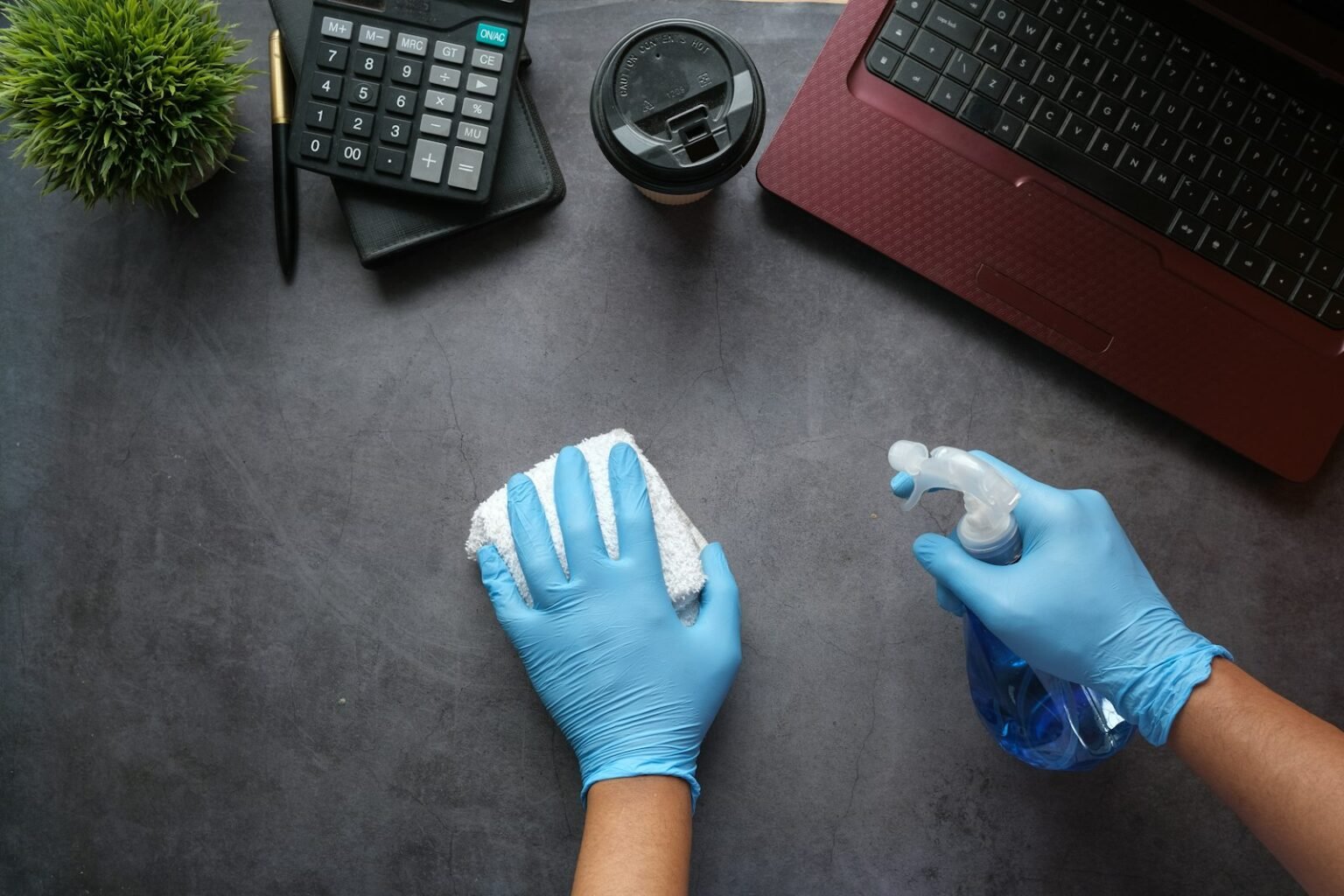
Every service you offer deserves its own page, its own pricing answer and its own set of target searches.
11. Remove the friction between interest and booking
Traffic that does not convert is a vanity metric. Put your phone number where a thumb can reach it, keep your booking form to the fewest fields you genuinely need, show your service area without making anyone hunt for it, and give an honest indication of price. Most cleaning company websites lose enquiries not because the visitor was unconvinced, but because booking took more effort than the visitor was willing to spend.
Google states that local results are ranked on three factors. Almost every step in this article strengthens at least one of them.
- Correct primary category
- A page per service
- Complete profile fields
- Accurate service areas
- Genuine location pages
- Consistent address data
- Review volume and quality
- Local citations
- Links from local sites
Distance is the one factor you cannot directly control, which is why relevance and prominence are where the work goes.
Phase 4: Build authority and prove it works (steps 12 to 13)
12. Earn local links from your own community
Links from other websites tell Google your business matters, and for a cleaning company the useful ones are local rather than national. Sponsor a youth team. Join the local business association. Partner with estate agents, letting agents and property managers who already refer work. Offer a genuinely useful comment to a local news story. These links are slower to acquire than the ones sold in bulk, and they are worth considerably more precisely because they cannot be bought at scale.
13. Measure the handful of numbers that matter
Track calls and form submissions from organic search, your ranking for the searches you chose in step two, how often your profile is viewed and acted on, and which pages actually produce enquiries. Ignore everything else. Most cleaning companies either measure nothing or drown in dashboards that never change a decision. Four numbers, reviewed monthly, will tell you what to do next. If you want an outside read on where you stand today, that is what an SEO technical audit is for.
How long does it take to grow a cleaning company with SEO?
Expect the first movement in the map pack within roughly six to ten weeks, particularly if your Google Business Profile was previously incomplete. That is usually the fastest available win. Meaningful organic growth, meaning first-page rankings for competitive local terms and a steady flow of enquiries, typically takes four to six months of consistent work across all four phases.
The reason it is worth the wait is that the visibility keeps working. Paid ads stop the moment the budget does. A cleaning company that has done this work properly keeps receiving enquiries from searches it earned months earlier, which is what makes SEO one of the highest long-term-value investments available to a local service business. You can see what that looks like in practice on my results page.
Where AI search fits in
A growing share of people now ask an AI assistant rather than typing a search. The encouraging part for cleaning companies is that the work barely changes. Answer engines pull from the same signals: a complete and consistent business listing, clear pages that state plainly what you do and where, direct answers to real questions, and corroboration from reviews and other sites.
What does change is how you write. Assistants extract self-contained answers, so a paragraph that fully answers one question is more likely to be quoted than a clever passage that only makes sense in context. Say what a deep clean includes in the paragraph under the heading that asks it. That habit serves conventional rankings and AI answers at the same time, which is the practical heart of answer engine and generative engine optimisation.
Frequently asked questions
How much does SEO cost for a cleaning company?
It depends on how competitive your area is and whether you do the work yourself or hire someone. The local fundamentals, meaning your Google Business Profile, citations and review process, cost time rather than money and deliver the largest share of the early result. Ongoing content and technical work is where paid help usually earns its keep, and I have written separately on what affordable SEO services should include at different budgets.
Can I do cleaning company SEO myself?
Yes, for a good portion of it. Claiming and completing your profile, fixing your business details across directories and asking every customer for a review need consistency rather than technical skill. Keyword research, site structure and technical fixes are where experience saves you from mistakes that are hard to spot and slow to undo.
How many pages does a cleaning company website need?
At minimum, one page per service you want to be found for, one page per area you genuinely serve, an about page that shows real people, and a contact page that makes booking simple. Add articles only once those are in place, because articles support the pages that take bookings rather than replacing them.
Do reviews really affect cleaning company rankings?
Yes. Reviews feed the prominence factor Google uses to rank local results, and they also decide whether someone clicks you once you appear. Both the volume and the pattern matter, which is why a steady flow from a repeatable process beats a burst of reviews collected all at once.
Should a cleaning company target commercial and domestic searches on the same page?
No. They are different customers with different budgets, decision cycles and language. A single page trying to serve both will convince neither and will struggle to rank for either. Give each its own page and let the rest of your site link to whichever one fits the visitor.
What is the fastest way to rank a cleaning company locally?
Completing and actively maintaining your Google Business Profile, then getting reviews flowing. It is consistently the quickest lever because so many competing cleaning companies have left their profiles incomplete, which leaves visibility available to whoever bothers to claim it.
Where to start
If you do nothing else from this article, do steps four and seven. Complete your Google Business Profile properly and build review requests into every job. Those two alone will move most cleaning companies in the map pack, and they cost nothing but attention. Then work back through the foundations and forward into pages, in that order, and let the results compound.
Want a second opinion on your cleaning company’s SEO?
Book a free call and I will tell you which of these 13 steps will move the needle fastest for your business, and which you can safely ignore for now.
Book a free call →